How to Build a Successful Career in Tech: A Roadmap for Students and Freshers
The technology industry is one of the fastest-growing career fields in the world. From Software Development and Artificial Intelligence to Data Science, Cybersecurity, Cloud Computing, and DevOps, students today have more opportunities than ever before.
However, having a degree alone is no longer enough. Companies are increasingly looking for candidates who can build real projects, solve problems, communicate effectively, and continuously learn new technologies.
If you are a student or fresher wondering how to start your career in tech, this guide will help you understand what actually matters and how to prepare yourself for the industry.
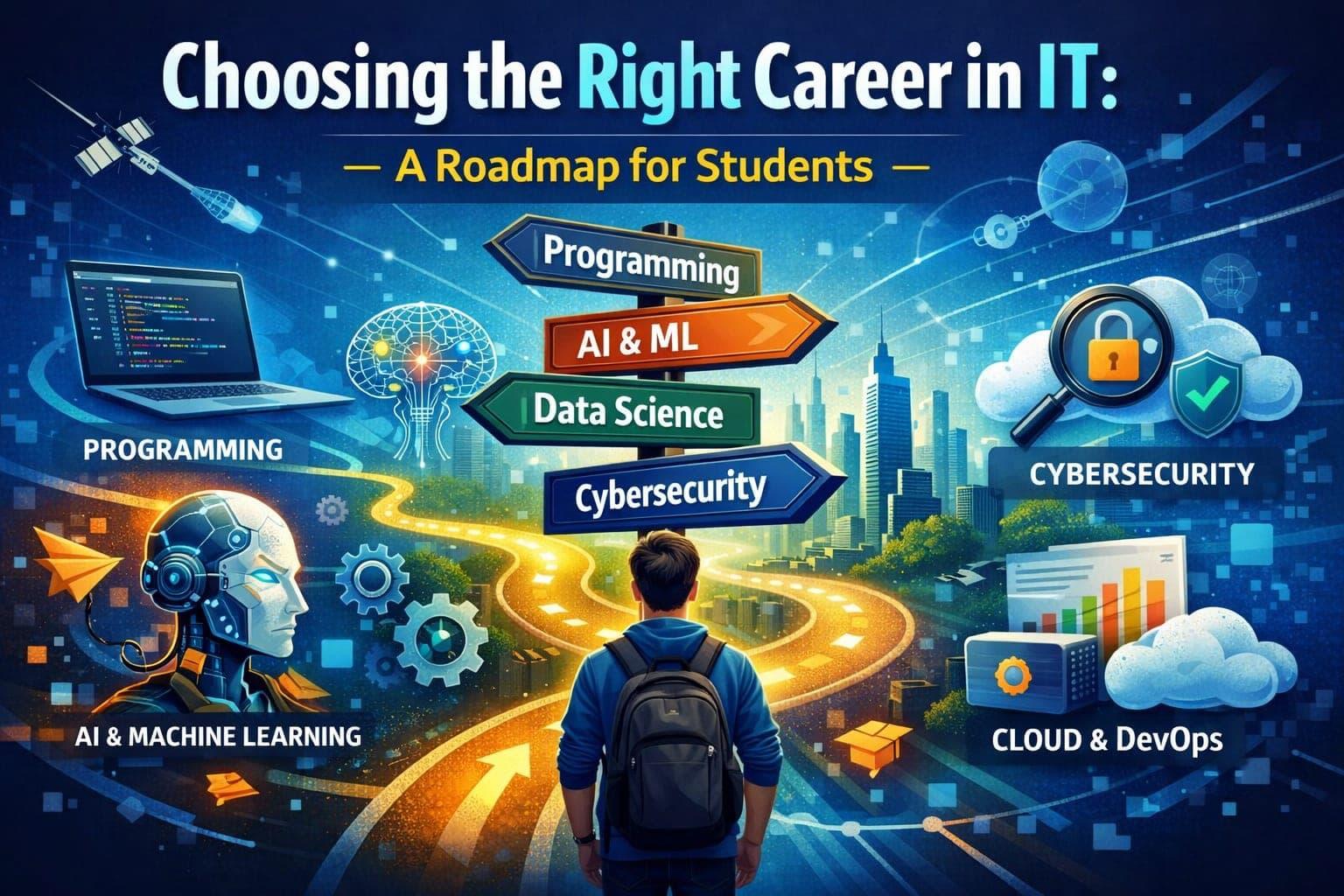
1. Choose the Right Career Path
The first step is understanding which area of technology interests you.
Some popular career paths include:
Software Development – Build websites, applications, APIs, and software systems.
AI & Machine Learning – Build intelligent systems, recommendation engines, AI applications, and predictive models.
Data Analytics & Data Science – Work with data to discover insights and support business decisions.
Cybersecurity – Protect applications, networks, and systems from security threats.
Cloud & DevOps – Deploy, automate, monitor, and scale modern applications.
UI/UX Design – Design intuitive and user-friendly digital experiences.
You don't need to master everything. Pick one primary direction and build strong fundamentals around it.
2. Master the Fundamentals
Before jumping into advanced frameworks and AI tools, focus on your fundamentals.
For software development, important foundations include:
Programming fundamentals
Data Structures and Algorithms
Object-Oriented Programming
Databases and SQL
Git and GitHub
APIs and HTTP
Authentication and authorization
Basic system design
For AI and Data Science, focus on:
Python
Mathematics and statistics
NumPy and Pandas
Machine Learning fundamentals
Model evaluation
Data visualization
Deep Learning basics
Strong fundamentals make it much easier to learn new technologies later.